The Falling of the Facade: It’s Not *Social* Media Anymore – It’s Entertainment
turns out normal people are so boring, they even bore themselves.
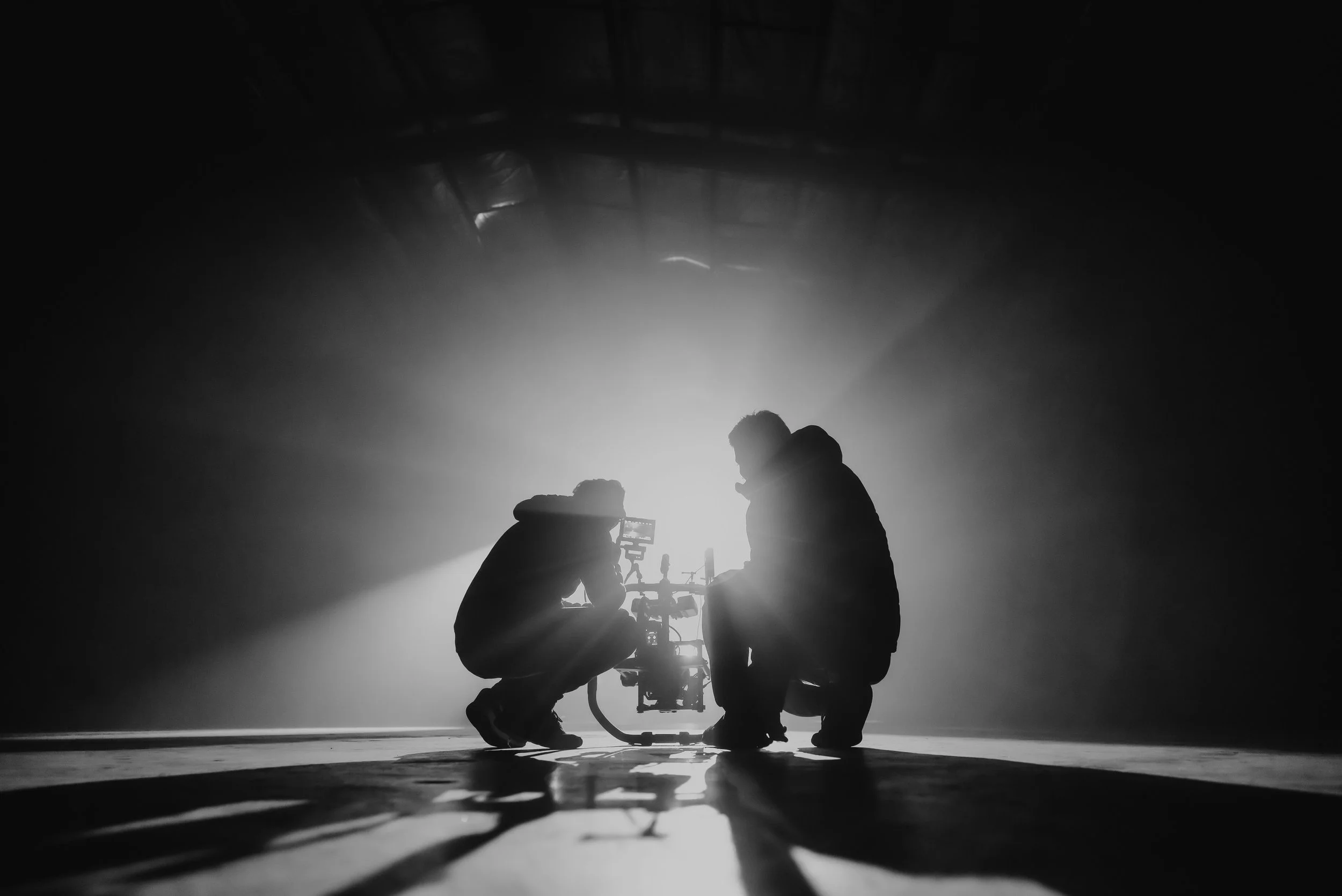
Photo by Natalie Parham
The original premise of social media was that it was a place to “connect with friends”.
That hasn’t existed for a long time now.
It even goes as far as feeling icky to broadcast your own personal lives, PLUS there are good reasons not to. Your boss may be watching. Your location could be used against you (break-ins, stalking, ‘receipts’). What you say can be screenshotted and circulated in a way to humiliate you in your community.
So the social part has moved increasingly to private channels.
It’s not only less awkward, it also feels safer.
So what is happening on the public feeds then?
For most normal people, it becomes a way to mark a big milestone.
Promotion. Engagement. Holiday. There’s a baby.
It’s not casual. It’s the big moments.
Bottom-line: unless you have a good reason to use social media, you probably already don’t.
The last remnants of the social media as a place to connect with our friends would be the ephemeral mediums like Instagram Stories and yes even still to this day Snapchat.
That’s it.
We even see the big updates like engagement of a baby often many days after it’s posted, as the feeds deem more important that we see ads, accounts we don’t follow, and four posts from YOUNGBLUD, Laufey, or whoever the feeds deem is the current favoured celebrity.
Does my photo of a salad, even if well lit and perfectly millennial in its colours and composition, stand a chance against a professional team of marketers pushing an active million-dollar campaign?
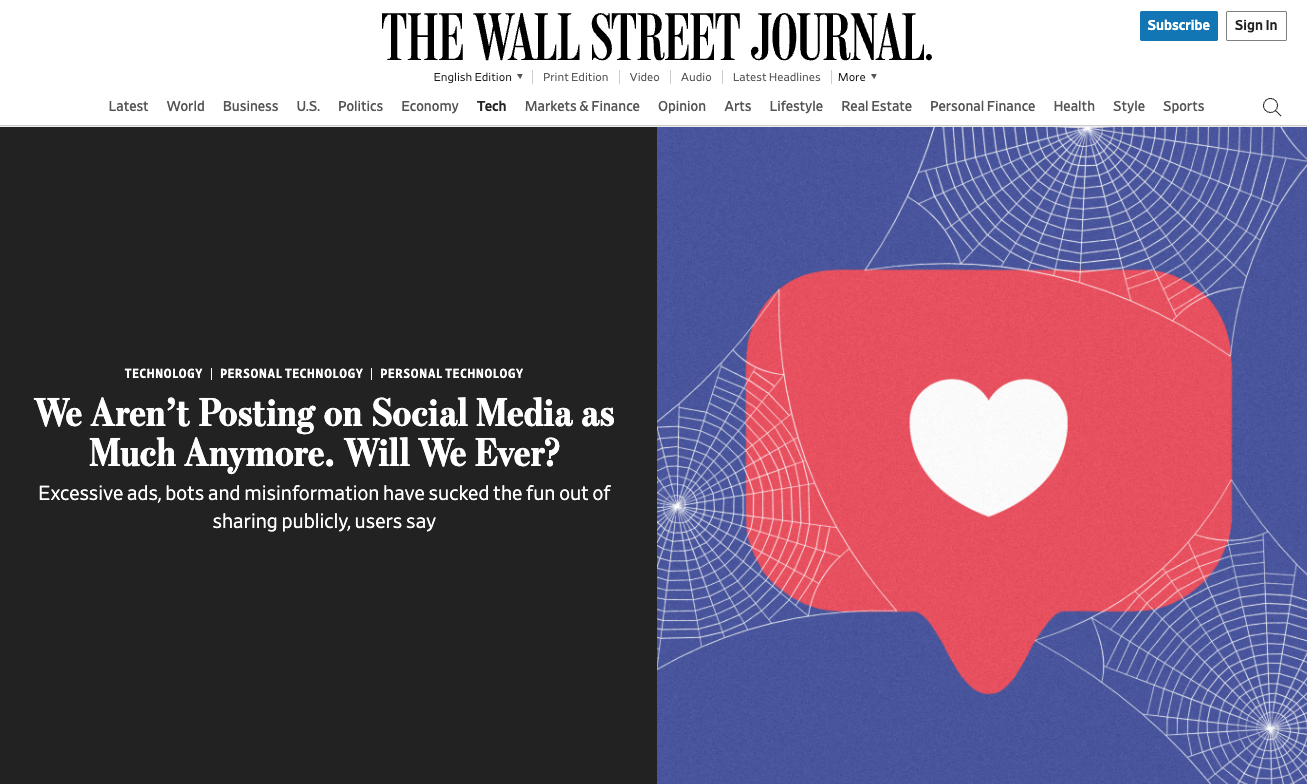
The Wall Street Journal reports that while billions access platforms like Instagram, Facebook, TikTok, etc., there's a noticeable decline in active posting. Users are fatigued by the rise of misinformation, toxicity, and the over-saturation of the platforms.
If there’s one piece of knowledge I wish I could insert into everyone’s brains, it’s how expensive everything you see on your feed is to make.
How do I know that?
Because I know how expensive it is to get reach on social media.
After 15 years of running social media accounts professionally, the benchmark used by the professional ad agencies I’ve worked with is that it takes 40 minutes to post one post on social media as a brand.
That is when you already have the content you’re looking to post ready.
Why does it take that long? If you’re posting it on multiple platforms, as you should be, you need to make sure you have the photo in at least three different sizes. You need to make sure the copy fits the format you’re working with. Some platforms need a direct upload/post – and even if they allow pre-scheduled content all platforms still require a quality check to make sure it all appeared correctly.
That’s a long way of saying = it’s expensive because it takes FOR EVH ER.
That is just posting.
That is not creating the content, making sure it’s aligned with the brand, optimising its performance, analysing the metrics, and then keeping an eye on how it’s doing.
If it takes that long, why would anyone even bother?
Brands, because they have to.
And brand is being defined loosely here. It can be companies, publications, politicians, founders… literally anything who has anything to gain by attracting attention to the work that they’re doing.
And once someone is putting sustained effort into maintaining a public presence because they have something to gain from that attention, they aren't really posting just as a person anymore.
They're operating as a brand.
“but I don’t like social media”.
yeah. I also don’t like accounting. That’s why I have an accountant.
This is why every entity that can afford it hires it out as soon as they can.
and nowhere is this tension clearer than in the world of music.
Social Media for an Artist
Artists have this problem turned up to 11 because their whole business is based on people liking them. Brands like banks and make-up can be corporate and high-production, whereas artists have this pressure of being “relatable and authentic”.
Mixed in with this narrative of social media being “a place where we connect with friends” there’s no wonder social media has been making most artists’ skin crawl for the past twenty years.
Music is by its very nature a highly produced medium. It takes a day to write the song and a day to produce the song, and that’d be considered quick. A reminder that a song is three minutes long.
Most artists I’ve met resent this pressure of having to show up on social media “as their true authentic selves”. Maybe because the craft that they’re there to promote, is just that: a profession, a craft – a mastery they’ve spent their whole lives cultivating. A mastery that is often (almost always) undervalued and taken for granted on a good day, and on a bad one exploited to make other people rich.
“just post on TikTok every day and you’ll figure it” out they are told a thousand different ways every day.
and I’m here to say, I think that’s BS and here’s why.
TikTok is TV
This has become my go-to talking point for the artists who come to me:
“Write your TikTok feed like a TV script”.
Set the scene, introduce your recurring characters – and tell your story not in one fingers-crossed-it-goes-viral clip, but build your narrative out over your feed.
What does that mean?
It means that:
TikTok and Instagram Reels are not social media anymore. They are entertainment.
Don’t believe me? when is the last time you saw a friend on one of these feeds.
What a sigh of relief.
I actually think this is the best thing that has ever happened.
I see the upside.
I know the power of reaching people.
I know that when the work is good and people know about it, you rise.
Social media is like a fiddle – a pain in the butt to learn and wrap your head around – but if you do, you can make it sing.
The current algorithms are actually, if you bother getting there, the most sophisticated audience development tool humans have ever invented.
It is WILD that just by saying who you are and what you do, granted quite often, with NO FOLLOWERS AND NO FRIENDS – you can literally find collaborators, your audience, access to opportunities, and even make money directly.
It feels like a cut-throat race to the bottom, because the upside is actually so incredibly wild.
What is valued above all else is storytelling.
And that is a lane I like just fine.
Music is a multimedia format now, and we can now finally just say it.
The pain in the butt about social media for the past many many years is this facade that we are “normal people doing normal things”. Meanwhile our feeds are filled with professionally scripted, lit, produced videos by those who make a living doing exactly that.
It is not an easy task, it is a whole damn job.
We wouldn’t pretend filming a music video or writing a book was “just something to do on our phones when we can”.
We would immediately recognise we needed to at least consult professionals, reserve time to attend to it properly, budget for it, and then execute it properly.
Why Is That Better?
To me, it’s actually freeing.
If you are not a professional entertainer yourself — hire it out
If you are in the business of entertainment, the facade of it having to “be just you talking to your friends” is gone.
YouTube is a great example of this. No one uses YouTube like “a social media platform”. And my point is that the other platforms are not only headed that way, they’re already there. So it goes for the rest of them.
And as a user? It makes decision making even easer. The facade of “being on social media to connect with friends” is also gone. Want to talk to your friends? Message them directly. Otherwise, you’re literally watching TV.
The facade of it being a space of connection is gone.
It is over. O V E R.
It also creates a distinction between social media as we used to think about them and messaging platforms. One is for conversation, and the other isn’t.
The Goal Was Never Actually Likes
It also means that the numbers we have all been trained to be addicted to (views, likes) are actually also BS. Yes, there’s more to this.
We know that the content we post gets pushed to our friends (eventually). They might not like it (cringe is now a thing, sorry). That doesn’t mean they didn’t see it and that you don’t have an opportunity to leave an impression.
The goal of social media was never to “get a ton of likes” if you really think about it. A good objective for using social media, now that it isn’t “connecting with friends” is actually getting visibility for your projects.
If the goal is: “have people hear my story”, it removes attachment to a specific platform.
The focus becomes creating the narrative of you and your project outside what the specific platforms are. You are telling a story. That’s the job.
The method of distribution is then almost an afterthought.
As it should be.
The traditional social media platforms are known for being a volatile way to build an audience. Yes, it giveth but dear-me does it taketh as well. A single update to an algorithm has ruined a-many business models for creatives.
If your assets are independent of any individual platform, and you use these algorithms what they’re best for driving discovery and reach you are using the platforms in the way they are using you, for your own benefit.
Instead of being a like-junkie refreshing your stats for an hour after posting praying for a hit, by planning out your next 20-40-60-100 posts into the future, you don’t actually care about the performance of each individual post.
Instead of creating and posting one video at a time,
your focus is where it should be: on what you have to say.
The one outstanding question I have is if these platforms can continue to pull people in after the promise of “connecting with friends” has disappeared.
My answer to that is yes.
TikTok is now TV. And people watch TV every day.
If you want to get on people’s feeds, “posting on social media” is the wrong brief.
It’s: “think like a filmmaker”.
That means writing, scripting, producing, shooting, editing, uploading, engaging – and if you can do that without plotting and planning, you are more talented than I am.
