Secret Sessions — Artist Meet Up
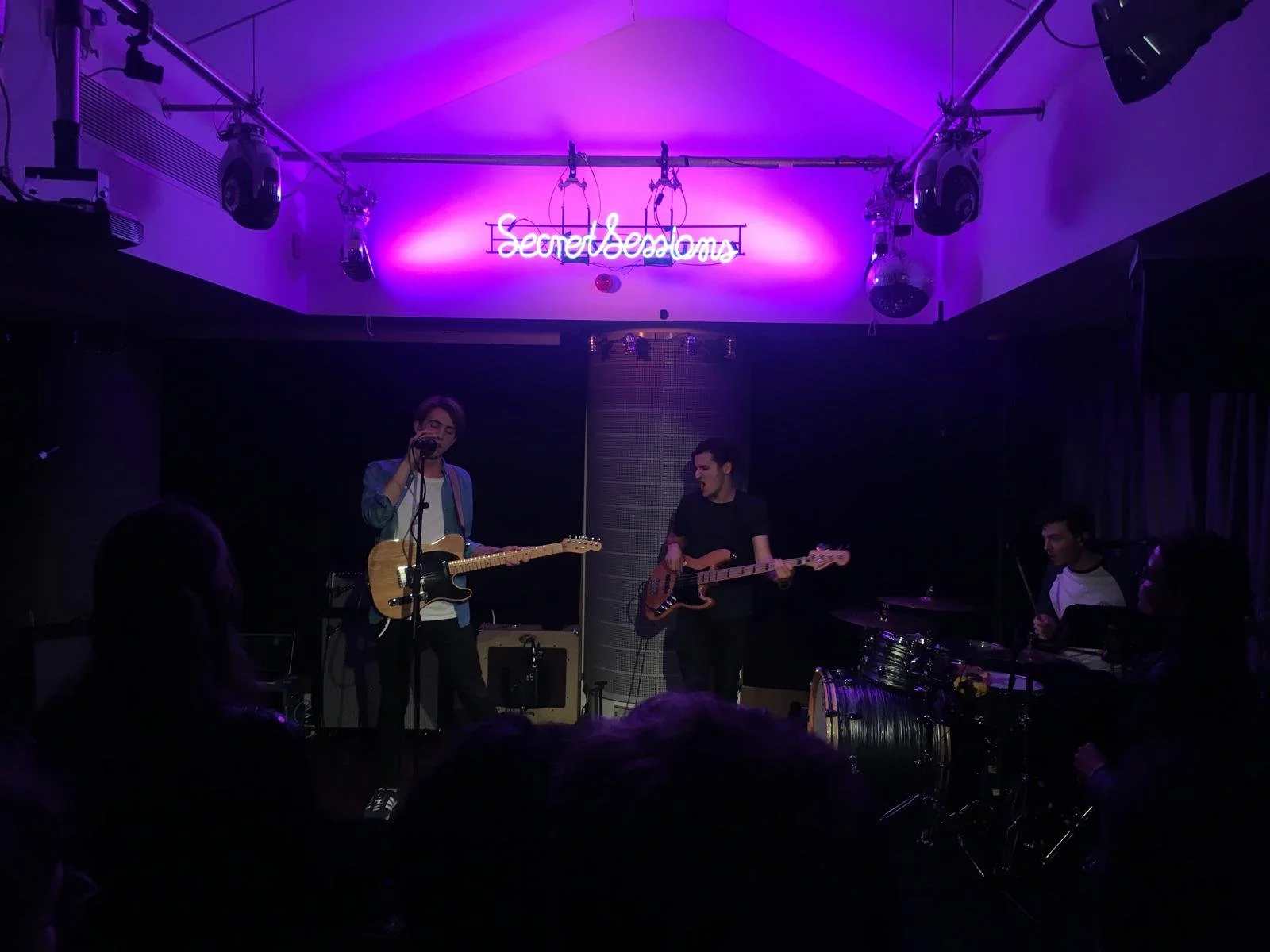
In March 2017, I was invited to give an industry talk at Secret Sessions’ Artist Meet Up at The Hospital Club in London.
Working as Product Manager at Promogogo, I was asked to speak to a room of independent artists about using the internet as a musician – or, as Secret Sessions put it, “negotiating online space.”
My argument was pretty simple:
Build the audience before you need the audience.
The internet wasn't interesting to me because posting on social media was inherently valuable. It was useful because when someone discovered your work — at a show, through a playlist, from a recommendation — they needed somewhere to find you afterwards.
And when the time eventually came to sell a ticket, release a record or launch something new, you wanted an audience already there to hear about it.
Here are my notes from the talk:
# INTRO
I am really excited to be here, I think the Secret Session does amazing and important work. I was asked here to do a short, casual talk with you – the artists, about using the internet as a musician – or as Harriet put it much more delicately than I ever could have "negoatiating online space".
My experience is very often when I talk to artists about using the internet is that they find it overwhelming.
The Internet is a little bit like exercising. Nothing you do today or tomorrow will change your life. If you're 20 kg overweight, going for a run today will not make you instantly lose 20 kgs. The social platforms work very similarly. It's not really that now that you have them everything is amazing.
It's more that when you need them in some undetermined future, you've got everything set up. And what can happen? So many different things.
I have literally seen this happen at least twice just recently. Some artist got put on one of the massive Spotify playlist, without them knowing, while they were on a hike somewhere in the middle of nowhere. 3-4 days without internet, and when she came back her phone was blowing up with journalist requests who needed photos of her because they couldn't find any good ones, etc.
Similarly, I'm not sure if you all are familiar with Postmodern Jukebox? Yeah? So they had a competition who could do a cover in their style the best. One of the shortlisted artist got featured on their Facebook page, where at this moment they have over a million likes. Great news, right? Except she didn't have any of the infrastructure in place – she didn't have a website or a Twitter or anything, so when she blew up on Facebook and attracted all this attention – she had nowhere to funnel that audience to.
## AUDIENCE
And that's what the internet is good for. It's good for not just reaching an audience, but keeping in contact with them.
Just so you know, almost no one who is successful has a viral hit. Most successful internet people have built up an audience over time.
And the internet feeds the real world, and the real world feeds the socials. And the socials feed everything else.
Do you know what is the best way to get more Facebook likes?
Having a live performance.
Seriously. When the two are used together, it makes it seem like a moment in time that is not to be missed.
# THE INTERNET
But also, we have to recognise the times we live in. The job of the artist used to be to get signed and then make good music. Now the job is to make good music, and also know how to manage yourself as an artist including all promo.
Which to me is crazy, why don't we have people that are good at promotion doing the promotions, and then have people who make good music, focus on making music?
But that's how it is now. The good side of that, is that the audience is really used to this relationship with you as an artist, and them as the followers.
To them it's NBD to follow you if they like what you've got to offer.
The way I like to look at is, is first that it's not really optional, and second, it's not really for your benefit.
Yeah, I'm not going to tell you that it's super fun to make sure to keep multiple different platforms looking good and smooth. It's basically life admin, like cleaning your flat, or paying your bills, or exercising. It's not really that doing all of it is super fun, but you'll probably regret it later on if you don't just accept it as a part of life and get on with it.
And the truth is, it shouldn't take up that much time. Yes, you can spend all day scrolling through the Facebook newsfeed, or you can spend 20 minutes once a week scheduling out your social media posts.
30 minutes once a month or so, just to make sure your website is up to date, all your tracks are on the platforms they need to be on, and that there isn't like a random broken link somewhere.
Because that's not what it's like. But the reason why it's important to be on the internet is – and if anyone can answer me this what's the alternative?
When you have someone interested enough in you, that doesn't know you but just comes across you, you want there to be something there for them to find.
Out of sight. Out of mind.
Then I want to let you in on a little secret.
I look around and I see dozens of musicians. I'm sure some of you are friends, you go hang out with your other music friends, and you may find it a bit cringy when one of them starts being 'like the brand' musician on Facebook or other related platforms.
The truth is, you're not building your audience out of each other, and other local musicians in the area. Building an audience means reaching people that you don't know, and might not even want to know, or are maybe on the other side of the planet.
They don't really care about you going to brunch with your boyfriend, or how cute your niece is. They like you for your music. What they want is your music.
These are the people you are serving. So what you need is a place where you can congregate these people in a place where this communication makes sense. You are a creator, they are the audience for your work.
And the internet was literally built for this. Okay, it probably wasn't, but it does this really well. People know how to interact with someone they admire online, they do it all the time with everybody else that they follow/like whatever.
The platform per se doesn't really matter, what matters is that this is not about you as your person who has a family and relationships and a dog and what else.
This is about you, the musician. That's what people want.
And this is something that is super easy to forget when you're constantly surrounded by other people who also do music – that what you conceive as boring and everyday, is like "backstage privilege" to almost everybody else.
Everyone has dreamt of being an artist on stage. Everyone has sung into their hairbrush or slammed on a pillow or whatever. Most of these people are now office monkeys who either didn't have the talent or the guts to go for it.
But you guys did.
And by sharing on Instagram or whatever platform works for you, just whatever it is you're doing, rehearsals, photos from the studio, eating some shitty sandwich at 2am somewhere in Poland because that was the only place still serving food after the show, cables, particularly cables – allows the office monkeys to live their dream they never pursued vicariously through you.
-------------
# BEING A BRAND
And while I really don't want to go all corporate jargon and yalls, the truth of the matter is that being a professional musician means that you are now a brand.
While that sounds pretentious and 'sell-outy' the only way to sell products is by being a brand. Whether you're selling tickets, or albums, or merch – people don't buy that stuff because they think you're super nice. They buy it from the professional entity of the musician you want to be – in other words the brand.
Building an audience is just a friendlier way of saying, okay you are a brand now.
# SELLING THINGS ONLINE
Because the thing is, most of the time, you don't really need to talk to your audience that much. How often are you performing live? Hopefully a lot, #teamlivemusic, but probably not much more than maybe 12-15 times a year. How often are you releasing a single, or an EP or an album? Even less frequently.
So what happens very often is somebody comes to me, has a gig this Saturday, and wants to sell 150 tickets. Or 500 tickets. And where is their audience? It has never been looked after properly.
So by looking after the audience, means that as soon as you have something to promote, whether it's a live show or a single or a tshirt, you have people who are already on your side. They want to know about your tshirt or single or whatever it is.
It's annoying to follow somebody online who only talks to us when they want us to buy something. By being a more consistent presence, means that when you've got something to show for it, people are ready to listen.
And the thing is, as a musician, the online presence doesn't feed itself.
The cycle should be, have some (mainly friends) following you online ---> doing a live show, someone in the audience doesn't know you and decides to follow you, growing your audience a little ----> the next time there's a live show, you have a few more people to tell about it, so there'll be more people in the audience -----> they might be excited to go to your show and bring some friends ----->
so the live shows feed the social, and the social feeds everything else.
